
Tech Industry Roundup 2024 Key Trends Innovations and Market Shifts
Technology in 2024 had a clear centre of gravity: artificial intelligence moved from headline promise to daily product feature. Yet the year was not only about AI. Chip supply shaped strategy, regulators became more forceful, cyber risk turned painfully visible, and the market rewarded companies that could turn big bets into real demand.
The year also exposed a gap. Some technologies felt close to magic in demos, while many organisations still wrestled with cost, trust, security, and skills. That tension defined the Tech Industry Roundup 2024 Key Trends Innovations and Market Shifts better than any single product launch.

AI became a product layer rather than a side project
Generative AI did not disappear after the hype of 2023. It became more embedded. The shift in 2024 was from standalone chatbots to AI features inside tools people already use.
Search, email, coding tools, design software, phones, laptops, customer support systems, and data platforms all gained AI assistants. The important change was placement. AI moved closer to the workflow.
The most visible developments included:
Multimodal models
AI systems became better at handling text, images, audio, and video in the same experience. That made them more useful for tasks such as summarising meetings, reading diagrams, describing images, and helping with voice-led interaction.
AI coding support
Developers continued to use assistants for code completion, testing, documentation, and debugging. The best use cases were narrow and practical, such as writing boilerplate or explaining unfamiliar code.
On-device AI
Phone and PC makers pushed more AI processing onto devices. This helped with speed, privacy, and offline use, although cloud-based models still handled many heavier tasks.
Enterprise copilots
Large software vendors built AI helpers into productivity suites, customer platforms, security tools, and analytics products. Adoption was uneven, but the direction was clear.
The hard part was no longer asking whether AI could produce useful output. The harder questions were more practical:
Can the result be trusted?
Who owns the data used in the prompt?
How much does it cost to run at scale?
Can it fit into old systems without creating new risk?
Does it save enough time to justify the spend?
By the end of 2024, many companies had moved away from vague AI trials. They wanted narrower projects with clear checks, defined data access, and measurable value.
That made the year feel less like an AI gold rush and more like the start of AI operations. Teams had to think about model choice, data quality, internal rules, security review, and human oversight.
Chips, data centres, and energy became strategic assets
AI demand made computing power a central business issue. The companies that could supply advanced chips, cloud capacity, and data centre infrastructure gained huge influence.
Graphics processing units remained in high demand because they are well suited to training and running large AI models. Nvidia stayed at the centre of this market, while cloud providers and chip designers worked to build or buy alternatives. Custom AI chips became more important as large buyers looked for better cost control and less dependence on a single supplier.
This did not only affect chip companies. It shaped the whole technology supply chain.
Area | What changed in 2024 | Why it mattered |
AI chips | Demand stayed high for advanced processors | Model builders needed more compute capacity |
Cloud infrastructure | Providers expanded AI-focused services | Customers wanted ready access to models and GPUs |
Data centres | Power, cooling, and location grew more important | AI workloads use large amounts of electricity |
Supply chains | Governments backed domestic chip projects | Chips became a national security and economic priority |
The energy question became harder to ignore. AI systems need large clusters of servers, and those servers need power and cooling. As demand increased, data centre operators looked at liquid cooling, better hardware utilisation, renewable energy deals, and in some cases nuclear power agreements.
This shift changed how people talked about technology growth. More software no longer meant only more code. It meant more physical infrastructure, more electricity, more land, more water in some cooling systems, and more pressure on grids.

Governments also treated chips as strategic assets. The US, EU, Japan, South Korea, and others continued to support domestic semiconductor capacity. The goal was not only economic growth. It was also resilience after years of supply chain stress.
The result was a more physical view of the tech sector. Code still mattered, but chip fabrication, energy contracts, cooling systems, and logistics mattered too.
Regulation moved from warning to enforcement
Regulators spent several years talking about the power of large technology platforms. In 2024, more of that talk turned into rules and enforcement.
In Europe, the Digital Markets Act began to reshape how large platforms handle app stores, messaging, search, and user choice. The EU AI Act also became a landmark framework for artificial intelligence, built around risk levels and stricter duties for higher-risk systems.
The UK took a more pro-innovation tone on AI, but still kept safety, competition, and data protection in focus. For companies operating across borders, the practical challenge was clear: one product may need to satisfy several legal regimes at once.
The main regulatory themes of 2024 were:
AI safety and accountability
Policymakers wanted clearer rules on high-risk uses, transparency, data practices, and human oversight.
Competition in platform markets
App stores, default services, search, payments, and messaging faced closer review.
Online safety
Governments pushed platforms to reduce harm, especially for children and vulnerable users.
Data privacy
Companies had to keep proving that they handled personal data lawfully and carefully.
Cyber resilience
The cost of outages and attacks made operational resilience a board-level concern.
The change was not only legal. It also affected product design. Teams building AI tools, connected devices, cloud platforms, or digital services had to involve legal, security, and policy experts earlier.
That slowed some launches, but it also forced better discipline. The era of shipping first and fixing later became harder to defend, especially for systems that affect finance, health, education, employment, public services, or personal data.
Cybersecurity became a reliability issue as well as a threat issue
Cybersecurity was already a major concern before 2024. What changed was how clearly security, software quality, and operational resilience became linked.
The July 2024 CrowdStrike outage was a defining example. A faulty software update affected Windows systems around the world, causing disruption across airlines, healthcare, banking, media, and public services. It was not a traditional cyberattack, but it showed how dependent modern life has become on a small number of trusted software layers.
The lesson was uncomfortable. A tool designed to protect systems can also become a single point of failure if something goes wrong.
Security leaders had to think beyond attackers. They also had to plan for:
bad updates
cloud service outages
identity system failures
supplier incidents
misconfigured access
ransomware recovery
backup integrity
incident communication
Ransomware remained a serious threat, especially for organisations with ageing infrastructure, weak identity controls, or limited security staff. Attackers continued to target hospitals, local authorities, schools, manufacturers, and service providers because disruption creates pressure to pay.
At the same time, AI changed the security picture. Attackers used AI to write more convincing phishing messages, translate scams, and speed up basic tasks. Defenders used AI to sort alerts, detect patterns, and help analysts respond faster.
Neither side gained a permanent advantage. The real advantage came from basics done well:
strong identity management
multi-factor authentication
regular patching
tested backups
least-privilege access
logging and monitoring
clear incident plans
supplier risk reviews
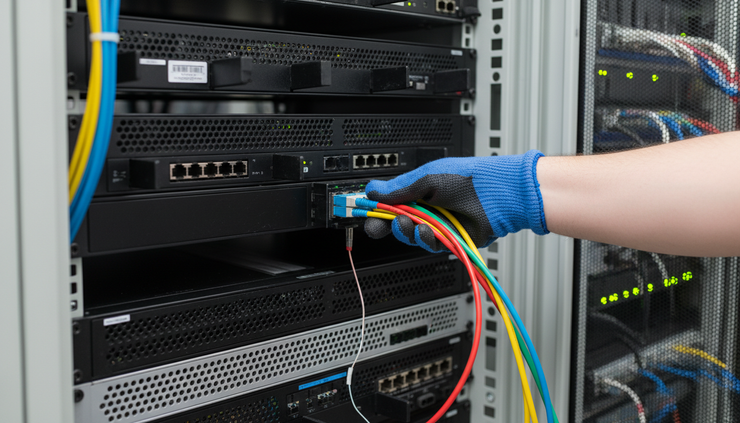
The broader market learned a simple lesson in 2024. Digital trust depends on more than stopping criminals. It depends on systems that keep working when software fails, suppliers struggle, and traffic spikes.
Consumer technology searched for its next big habit
Consumer tech in 2024 was a mixed story. Some categories felt mature, while others tried to create new behaviour.
Apple launched Vision Pro in the US early in the year, bringing high-end mixed reality back into public conversation. The hardware impressed many reviewers, but price, comfort, app depth, and everyday use cases limited mass adoption. It showed what spatial computing could become, but it did not make headsets mainstream overnight.
AI phones and AI PCs received more attention. Device makers promoted features such as live translation, image editing, smarter search, writing help, and local AI processing. The challenge was making those features feel necessary rather than decorative.
Foldable phones kept improving, but they remained a premium niche. Wearables continued to focus on health, fitness, and battery life. Smart home products still suffered from fragmentation, although Matter, the connected home standard, helped push the industry towards better device compatibility.
Gaming had a difficult commercial year in many studios, with layoffs and project cuts, even as player demand stayed strong. The industry faced higher development costs, long production cycles, and pressure from subscription models. At the same time, handheld gaming PCs and cloud gaming kept widening the ways people play.
The wider consumer pattern was clear. People were not short of devices. They were short of reasons to replace devices quickly.
That changed the way companies sold technology. Better cameras, faster chips, and brighter screens still mattered, but upgrade cycles were harder to force. Useful AI features, longer battery life, repairability, privacy, and ecosystem fit became stronger selling points.
The tech market rewarded focus and punished excess
The technology market in 2024 kept adjusting after the boom years. Layoffs continued across parts of the sector, even as the biggest AI and cloud companies spent heavily on infrastructure. This created a strange split: some firms cut staff to protect margins, while others raced to hire specialist AI talent and secure computing capacity.
Venture capital also became more selective. AI start-ups still attracted interest, especially those building model infrastructure, enterprise tools, chips, robotics, security, and data products. Yet investors pushed harder for evidence of product demand and realistic costs.
Public markets showed the same pattern. Companies tied to AI infrastructure performed strongly. Others had to prove they could grow without overspending.
A few market shifts stood out:
AI infrastructure gained value
Chips, cloud platforms, networking, cooling, and data centre companies became central to growth plans.
Software buyers became more cautious
Many organisations reviewed tool sprawl and asked vendors to prove clear value.
Start-ups faced higher standards
A good demo was not enough. Buyers wanted reliability, security, and integration.
Platform power stayed under pressure
Large technology companies remained highly profitable, but regulators and customers pushed back on closed ecosystems.
Open-source AI gained momentum
Open models gave developers and organisations more choice, although licensing, safety, and support varied.
This was not a simple downturn. It was a sorting year. Money kept flowing into areas with strong demand, especially AI infrastructure. At the same time, weaker products, unclear business models, and overbuilt teams came under pressure.

What 2024 means for the year ahead
The biggest lesson from 2024 is that technology growth now depends on execution as much as invention. AI can produce impressive results, but only useful systems will last. Chips can unlock new products, but power and supply constraints will shape what is possible. Regulation can slow some companies down, but it can also build trust. Cybersecurity can no longer sit apart from reliability.
For technology leaders, builders, and buyers, the practical takeaway is simple:
choose AI projects with clear goals
treat data quality as a core asset
review suppliers and single points of failure
plan for regulation early
measure energy and infrastructure needs
focus on products that solve real problems
The tech industry did not become quieter in 2024. It became more serious. The next phase will reward companies that can turn powerful tools into dependable services, useful products, and systems people can trust.


